How a Cure for Aging Could Transform Humanity

A child born into a world without biological aging would inherit a very different future from ours. Not just a longer life, but a life where the old pattern of growth, decline, and death no longer sets the pace for families, work, politics, memory, and meaning.
A true cure for aging would not mean that no one could die. Accidents, infections, violence, and other diseases would still exist. It would mean the body no longer breaks down simply because time has passed. Muscles, organs, bones, blood vessels, skin, and the brain could stay healthy for far longer, or even be repaired when age-related damage appears.
That single change would touch almost every part of civilisation. It could reduce suffering on a scale rarely seen in medicine. It could also create serious pressure on resources, fairness, and social trust if access is limited to the wealthy.
This article is informational only and does not offer medical advice. Aging research is active, but no proven cure for human aging exists today.

A cure for aging would first change health, not just lifespan
The biggest effect would be simple and deeply human: fewer years spent in pain, weakness, confusion, or dependence.
Most people do not fear age itself as much as they fear what often comes with it. Frailty. Dementia. Loss of mobility. Chronic disease. A body that heals slowly. A mind that no longer feels like home.
If scientists could treat the root causes of biological aging, many common age-linked diseases might become less frequent or less severe. Research already connects aging with conditions such as heart disease, many cancers, type 2 diabetes, osteoarthritis, Alzheimer’s disease, and stroke. These diseases are not identical, but they all become more likely as the body accumulates damage over time.
That means the first promise of aging medicine is not “living forever.” It is healthier years.
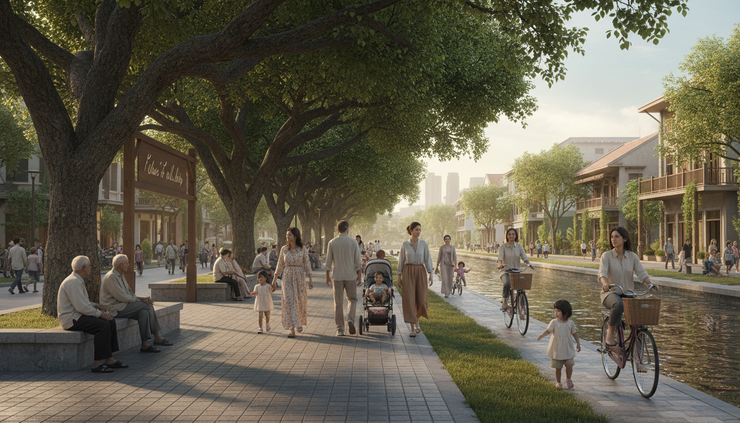
A person in their 80s might have the strength and balance of someone much younger. A 100-year-old might still learn, travel, raise children, farm, build, teach, or create music. Hospitals could shift from treating late-stage decline to maintaining long-term health. Families might spend less time managing crisis care and more time actually living together.
This would also change how we think about medicine. Today, health systems often treat age-related diseases one by one. A cure for aging would aim further upstream. Instead of waiting for five diseases to appear over 30 years, medicine might target the ageing process that raises the risk for all of them.
The social effect would be huge. In Thailand and many other countries, families often carry much of the care burden for older relatives. If older adults stayed healthy for longer, fewer families would face years of exhausting unpaid care. Public health budgets could also change, though not always in simple ways. People might need fewer late-life interventions, but they could also live long enough to need care across a much longer total life.
The best version of this future would not only add years. It would remove a large share of suffering from those years.
Society would need to rethink age, work, and family
If healthy life stretched far beyond today’s limits, the usual life script would stop making sense.
At the moment, many societies follow a rough pattern:
Study while young
Work through adulthood
Retire in later life
Depend more on family or the state near the end
A cure for aging would break that sequence. If a person could remain healthy for 120, 150, or more years, a single career might feel too narrow. Education could happen many times. Retirement might become temporary. People might work for 20 years, study again, raise a family later, change fields, rest, and return to work.
Age would become less useful as a measure of ability. Today, age often tells people what they are expected to do. Too young to lead. Too old to start again. Too late to learn. Too early to settle down. In a world where bodies and minds age much more slowly, those assumptions would weaken.
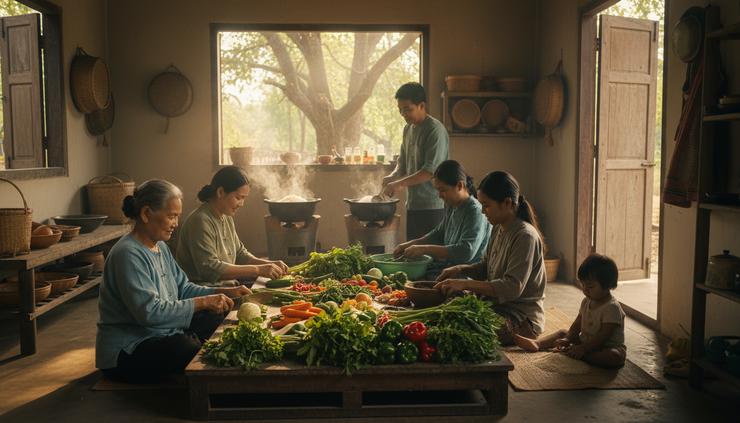
Family life would change too. Parents might live to see not only grandchildren, but many later generations. That could create stronger family memory. Stories would not pass through books or recordings alone. People who lived through major events could speak about them directly for centuries.
There would also be tension. If older generations remain healthy and powerful for longer, younger people may struggle to gain influence. Jobs, housing, land, and political authority could be held for longer periods. A country might gain wisdom, but it could also face stagnation if leadership never changes.
Possible benefit
More experienced people could keep contributing in science, farming, teaching, craft, medicine, and public service.
Possible benefit
Families could maintain knowledge, language, recipes, land skills, and traditions across many generations.
Possible risk
Younger people could find fewer openings if older adults stay in the same roles for decades longer.
Possible risk
Family power structures could become harder to challenge, especially where wealth passes through inheritance.
Education systems would need to adapt. Instead of preparing people for one adult life, schools and universities might support learning across a full extended lifespan. A person could train as an engineer at 25, a nurse at 70, a farmer at 110, and a historian at 160.
The deeper question would be cultural. If life is long, do people become more patient, or do they delay too much? Would love, ambition, and duty feel stronger because time is abundant, or weaker because urgency fades?
No technology can answer that alone. Culture would have to grow with the science.

Fair access would decide whether the cure heals or divides humanity
The most dangerous version of this future is easy to imagine: a cure exists, but only the rich can afford it.
That would create a new kind of inequality. Not only wealth inequality, but lifespan inequality. Some people would receive decades or centuries of healthy life, while others would still face the old cycle of decline. The gap between rich and poor could become biological.
This would affect everything.
People with access could keep gaining education, property, influence, and networks over much longer lives. Their advantages would compound. Families without access could lose loved ones at today’s pace while watching others remain strong for generations.
The result could be anger, migration pressure, black markets, medical tourism, and political unrest. A treatment that should reduce suffering could instead become a symbol of unfairness.
For that reason, a cure for aging would need public planning long before it becomes widely available. Governments, medical bodies, and global health organisations would face hard questions:
Who gets access first?
Should treatment begin with people already facing serious age-related decline?
Should children receive it, or only adults?
How should safety be monitored over very long periods?
Can public health systems afford it?
What happens if countries set very different rules?
There is no simple answer. Treating aging would not be like selling a luxury product. It would affect the structure of society. If access is left only to market forces, the outcome could be deeply unstable.
A fair approach might treat aging medicine like vaccination, clean water, or essential care. Not identical in cost or delivery, but similar in moral importance. If a safe therapy prevents severe decline, many would argue it should not be reserved for those with the most money.
This issue would matter worldwide, including in middle-income countries. A country with strong family networks but uneven wealth distribution could see both great benefits and serious strain. Rural communities, informal workers, and older adults outside major cities would need access too, not only patients in private hospitals.
The cure would test whether humanity can share life-extending science wisely.
Population, resources, and the planet would face new pressure
Longer healthy life would raise an obvious concern: would the world become overcrowded?
It might, but the answer is not automatic. Population size depends on many things, including birth rates, death rates, migration, urban planning, food systems, energy use, and culture. In many countries, birth rates have already fallen as education rises, healthcare improves, and families choose to have fewer children.
If people live much longer but birth rates stay low, population may grow slowly or age in a different way. If long life combines with high birth rates, pressure could rise fast.
The planet’s limits would matter more than ever. More people living longer means more demand for:
Housing
Food
Water
Energy
Transport
Healthcare
Land
Waste management
By contrast, healthier older adults could also help solve these problems. Long-lived engineers, farmers, scientists, builders, and community leaders could work on climate adaptation, clean energy, soil recovery, and disaster planning across longer time spans. A person who expects to live for another 100 years may care more about the condition of rivers, beaches, forests, and cities in the future because that future is still their own.
That could change politics. Today, many decisions reward short-term gain. If voters, leaders, and workers all expect to live with the consequences for much longer, public pressure may shift toward long-term planning.
Still, long life alone would not make people wise. A society can live longer and still waste more. A cure for aging would need to arrive alongside better resource policy, cleaner technology, and more honest planning around consumption.
The most hopeful path is not endless growth. It is longer life paired with lower waste, better health, and stronger stewardship of shared resources.
Death, meaning, and identity would not disappear
A cure for aging would change death, but it would not erase it.
People would still die from accidents, disasters, violence, rare diseases, and choices that carry risk. Life would remain fragile. What would change is the background expectation that the body must always decline simply because enough years have passed.
This would reshape philosophy, religion, art, and personal identity. Many belief systems make sense of life partly through mortality. If people no longer expect a short lifespan, communities would revisit old questions.
What makes a life complete? Is there value in an ending? How long can one person remain the same person? If memories stretch across centuries, do they deepen identity or become too heavy to carry?
A longer life could lead to richer forms of purpose. Someone could master several arts, repair broken relationships, become fluent in many languages, or spend 50 years restoring a forest and then live to see it mature.
It could also bring new forms of fatigue. Boredom, grief, guilt, and trauma could accumulate. Losing friends to accidents or unequal access might hurt even more in a world where many deaths feel preventable. Mental health care would need to grow with lifespan. So would rituals for renewal, rest, forgiveness, and change.
The fear of missing out might fade for some people. There would be more time. At the same time, people might postpone life because time feels endless. Starting a family, writing a book, apologising, moving home, or changing a harmful habit could always wait another decade.
Long life would not automatically produce a meaningful life. It would give people a larger canvas. What appears on it would still depend on values, relationships, and choices.
The best future is longer life with stronger responsibility
A cure for aging could be one of the greatest turning points in human history. It could reduce disease, protect families from long years of decline, extend creativity, and allow people to contribute far beyond today’s natural limits.
It could also deepen inequality, strain resources, trap power in older hands, and force societies to answer questions they have avoided for centuries.
That is why the science cannot stand alone. The cure would need ethics, public health planning, environmental care, fair access, and cultural maturity. Humanity would need to decide not only how to live longer, but how to live better with one another.
The central question is not whether longer life would transform humanity. It clearly would. The real question is whether we can become wise enough to handle the gift before it arrives.


Comments